BRICS
Отиди на страница:

| коментар под статия: 1:23 pm May 27, 2014 Regular Joe Investor wrote: A Typical Apartment in Shanghai Costs More Than 45 Times The Average Residents. So what started out as a comment on Seeking Alpha is turning into an official article. I’m going to discuss my observations and opinions regarding the housing bubble in China, and what I expect to happen sometime in the near future. I am not a financial professional. I invest a little money on the side. I’m a small timer. Just an average Joe. And these are just my observations and opinions. I am certainly not trying to hurt or offend anyone. Thank you. There is currently an oversupply of housing in China. Nowhere else in the world has there been so much construction for residential housing, commercial, and office space than there has been in China the last 10 years. This has led to a huge surplus in housing. And nowhere else in the world are there entire Ghost Cities as there is found in China. In the well known 60 minute article, China Vanke Co.’s Wang Shi states that yes, there is a Real Estate Bubble in China. And when asked if the typical apartment in Shanghai was 45 times the average residents salary…Mr. Wang Shi said that it was even higher…and he went on to say it was dangerous. If the typical apartment in Shanghai costs more than 45 times the average residents salary, then I think it’s safe to say that mathematically, the average resident in Shanghai who doesn’t already have a house…cannot afford to buy one today… So, if the average resident in Shanghai is not able to buy the typical apartment, then the next question is…who is buying up all the apartments there? The rich, maybe some real estate investors, Chinese companies investing its money in Chinese apartments, REIT’s, and lastly the corrupt Chinese government officials are left to buy the typical apartment in Shanghai… And these individuals, companies, and the corrupt Chinese government officials who could afford to buy the apartments in Shanghai…if they followed regulations…then they would only be allowed to buy a certain number of apartments in Shanghai…right? Because in Shanghai and other cities…China has initiated housing curbs in the past in order to rein in speculation in housing…and the subsequent soaring housing prices. These housing curbs initiated by the Chinese Government include raising the down-payment mortgage requirements, increasing construction of low-cost social housing, and restricting home purchases in about 40 cities. I think increasing the construction of low-cost social housing probably wouldn’t really affect the property market, because, again, the average Chinese resident cannot afford an apartment anyways. But providing special low-cost social housing will satisfy one of the basic needs for those who need but cannot afford housing in China. However, not everyone follows the rules. There are so many articles on how some corrupt or unlawful Chinese are somehow averting the rules and buying more properties than they are allowed to buy. In one instance, a banker from the northern province of Shaanxi was able to amass a property Portfolio of over 41 apartments in Beijing by forging or illegally purchasing documents. The corruption in China is extreme. And that is another article in of itself. Chinese President Xi Jinping is on a crusade to purge these corrupt Chinese officials. The corruption in the Chinese Government is immense. Please Google Chinese Corrupt Officials to see a slew of articles covering this in depth, as well as to see what Chinese President Xi Jinping is doing to combat it. This will lead to a decrease in the number of wealthily corrupt Chinese officials who are buying up all the excess housing in China. I believe that a lot of the Housing in China is being illegally purchased by individuals and companies who can afford to buy up all the properties for sale. These individuals and corporate companies investing its money are illegally buying more homes than they are supposed to. However come June of 2014, there will be a drafted copy of the Unified Property Registration System which will be implemented by the end of 2014. The purpose of the Unified Property Registration System is curb corruption and unlawful activities, and this will keep someone from buying more homes than they are supposed to. The new Unified Property Registration System will allow one unified system to track all properties that are bought or sold, and in this manner, the Chinese Government will be able to locate corrupt Chinese officials or anyone else who may be unlawfully buying or selling apartments in mass. The new Unified Property Registration System will also allow the Chinese Government to keep track of how many properties every individual buys, thus allowing it to enforce the number of properties they may buy. Demand is slowing because the people who can afford to buy houses in China have already bought one. Otherwise, the people who have not yet bought a house can not afford to buy one. Individuals who have wrongfully purchased houses in any manner are currently listing their properties to sell before the new Unified Property Registration System takes place later this year. This is important because the new Unified Property Registration System will catch those corrupt or unlawful home owners whether or not they sell or keep their homes. As a result of the Unified Property Registration System, those individual who wrongfully amassed their real estate fortunes in China and are not discovered, will have to invest in further real estate ventures outside of China. Thus the huge increase in Chinese foreign real estate investments in United State, Europe, and Australia among other countries as compared to last year. As for the lawful rich, who are able to buy houses in China, they are now also looking to invest their money over seas. Overseas investments have increased significantly from last year. And all this investment money flowing out of China is only going to further hurt the sales of homes in China. I do not have a financial back ground, but I do invest in Real Estate in the United States. I have ready as many books in real estate as I could over my 10 years as a real estate investor. So real estate and real estate investing is something I feel like I know a little about. And I believe that investing in empty homes is like burying money into the ground. Anyone who has ever owned a House knows that houses Deteriorate and will need maintenance over time. And this is something the Chinese who buy houses for investment purposes do not appear to be thinking about at this time. Most Chinese developments do not even have Home Owner’s Association dues, and this is puzzling to me. Because what happens when the elevator breaks down? Someone has to pay for it. The Chinese who are buying up the apartments appear to be investing for price appreciation, and real estate investors know that you invest for cash flow and not for price appreciation. Price appreciation is just a bonus you may get over a long period of time investing in real estate and should never be the primary reason for investing in real estate. And when you invest for price appreciation, it’s not really investing…its speculation…as you are speculating that the price of housing will go up in the future. As a real estate investor, I rely on my tenants to pay my carrying costs for my rentals as well as provide me with a healthy positive cash flow every month. There is less and less land available to sell and this is where cities get upwards of 60% of their revenues. So the Cities will need to at some point, come up with another source of Revenue…which will eventually lead to Property Taxes. And every real estate investor knows that an empty home with Property Taxes is a money losing proposition. And if the Cities do nothing…then, in the end…they’ll run out of money… There will be less and less land to build on over time. And the land available to build will continue to get more expensive to buy over time. And there will come a time when the cost of the land will be so high…that it will not make financial sense for the real estate development companies to continue to operate. More expensive land, coupled with a discounted property Market is signaling the end for many Real Estate Developers in China. And as housing sales slow in China, it will affect the housing materials industry as well. And since the housing industry is such a huge part of the Chinese economy…ultimately the entire Chinese economy will be greatly affected by the coming real estate collapse. If the Real Estate Developers cannot sell the finished Residential Houses and Commercial Buildings, then the Banks will be left responsible for the outstand loans. And the houses and buildings are really not worth that much…empty and unwanted. China has a Shadow Banking System which allows the less qualified Real Estate Developers to obtain loans at a higher interest rate. This just makes the less qualified Real Estate Developers even weaker by having higher carrying costs. And more and more developers are having to rely on the Shadow Banking System for their construction loans. China’s population is hardly increasing. China has had a one child policy for the last 35 years. My take on urbanization is that yes, the Chinese population is moving from the Rural Areas to the Urban cities, but this doesn’t help the Chinese real estate market since, again, the average Chinese person cannot afford to buy a home at over 45 times the average residents salary in cities like Shanghai. I have read that Land in China is not actually sold, but leased to Developers for up to 70 years. “Leased.” And wording on the lease contracts are not clearly spelled out as to what happens when the 70 year lease term expires. So the clock is ticking…and I would think as time goes on the less value a house or property would have…kind of like a stock option with an expiration date. 3:09 pm May 27, 2014 Regular Joe Investor Part 2. wrote: I have read that Land in China is not actually sold, but leased to Developers for up to 70 years. “Leased.” And wording on the lease contracts are not clearly spelled out as to what happens when the 70 year lease term expires. So the clock is ticking…and I would think as time goes on the less value a house or property would have…kind of like a stock option with an expiration date. But instead of going down, the real estate Market has been soaring over the years. Moody’s changed its Chinese Property Industry Outlook from Stable to Negative on 5-20-14. This should make it more difficult for Chinese Property Developers to issue bonds, and if they do issue bonds, it will be at a higher interest rate due to the lower negative outlook grade. This may lead some of the Chinese Real Estate Developers to obtain loans from the Chinese Shadow banking system at higher rates than in the past. At some point, the Chinese who are buying up the properties in China at such a high valuation will finally see the Real Estate Market Bubble for what it is. Because if my rental properties appreciated so that they cost even 10 times the average annual salary of a resident, I would promptly sell my properties. Because I would know that it would just be a matter of time before the real estate market came crashing back to prices at which residents could actually afford to buy a home. There are some who are seeing the Chinese Real Estate Bubble for what it is and what it means. For instance, China’s Richest man has sold all of his property in China…only to invest in Europe. Li Ka-Shing has a reputation of seeing things ahead of everyone else. A question one needs to ask himself before investing in The Chinese Real Estate Market is if Li Ka-Shing is selling, why aren’t you? Or another way to put it is, why are you buying when the Richest man in China is selling. Due to the high cost of the housing and the lower demand for it…something has got to give and eventually the prices of housing must start to come down. And when this happens, the developers and property owners will lower their prices all at once…and nobody will buy…as most Chinese investors have been buying in anticipation of a price increase…and this will ultimately cause a housing market crash. Based on my findings and beliefs, I firmly believe a real estate Crash in China will happen at some point. I don’t know when, but from history…we all know what happens to bubbles… Full Disclosure: I have Put options on CAT, CHIX, EWA, EWH, FXI, TAO. http://blogs.wsj.com/chinarealtime/2014/05/26/tycoon-sees-titanic-moment-for-chinas-housing-market/ |
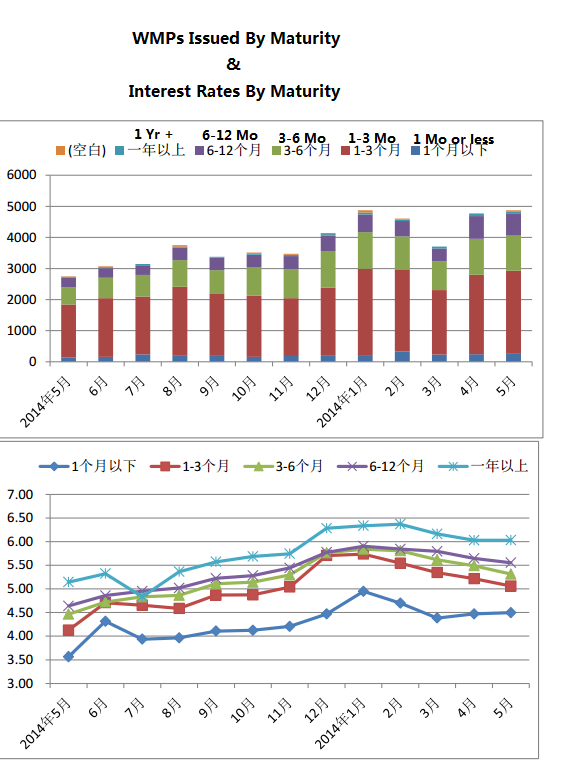
China press: China Beijing Safe Bank Investment Funds is unable to repay investors on a CNY600 million product May 29th, 2014 00:37:48 GMT China’s 21st Century Business Herald reports (via MNI): China Beijing Safe Bank Investment Funds is unable to repay investors on a CNY600 million product Was due back in March Officials are now saying they are still unable to pay out, despite the three month extension The company has around CNY4 billion in outstanding products, with 2,000 investor; most are set to mature in June The company’s former legal representative has said the company is working on disposing of its assets but can’t guarantee how much investors will get back всичко върви по план-програмата на ккп и тов. си |
Season Joy City offers a party bag of bonuses to lure potential buyers. The development’s original selling point was “buy one floor, get one free.” When China Real Time visited last week, helpful sales assistants also offered to throw in kitchen fittings and four air conditioning units for nothing. But the biggest draw is a “zero down payment” scheme, available for a two-and-a-half-week period only. At first sight this seems to go against government regulations, brought in to keep house prices under control, which stipulate a minimum 30% down payment on ordinary residential purchases. Zero down payment schemes have popped up around China as developers go to ever greater lengths to shift apartments, but Season Joy City may have the distinction of being the first to try it in Beijing, said Tang Li, an analyst at North Square Blue Oak, an investment bank. “They will help homebuyers to apply for this consumer loan that they can use as a down payment,” said Mr. Tang. “It’s very difficult to judge whether this is in line with the regulations or not. So far there’s been no punishment from the government.” In Season Joy City’s showroom, a billboard explains why house prices won’t fall in China. The property market is a big contributor to the economy, it says, so the government won’t allow prices to fall. “If the property sector is in deep trouble, it’s going to affect a whole lot of industries and that will drag down the entire economy,” said Liu Qinglong, assistant sales manager at the development. “I think in the future the government will set up a long-term mechanism to ensure steady growth of property market.” http://blogs.wsj.com/chinarealtime/2014/05/29/zero-down-payment-chinas-developers-get-desperate/  |
| р-то: (Reuters) - President Vladimir Putin said on Wednesday that Russia should consider recapitalizing state gas company Gazprom after a $400 billion deal with China which will require multi-billion-dollar investments in pipelines and new fields. "The government and finance ministry should consider the possibility of recapitalizing Gazprom in the amount needed to build up new infrastructure," Putin said at a meeting on energy strategy in the southern city of Astrakhan. Boosting Gazprom's capital would put additional pressure on the Russian economy, already slowing due to a lack of reforms and following Western sanctions on Russia over its annexation of Crimea, which have weighed on the rouble and triggered capital outflows. Russian authorities have estimated that the 30-year China deal could add 0.3-0.4 percentage points to economic growth annually from 2015. The economy is likely to grow by around 0.5 percent this year, the central bank said. Putin did not say how exactly Gazprom could be recapitalised but hinted it could be done from Russia's gold and foreign exchange reserves. Some companies admit there could be risks in borrowing abroad because of sanctions. Igor Sechin, CEO of Russia's state oil producer Rosneft, publicly acknowledged this for the first time on Wednesday when he told Putin the company faced potential risks both in borrowing abroad and implementing its foreign projects. Sechin, although not Rosneft, is on the U.S. sanctions list as a close ally of Putin. ЛОНДОН, 4 июня. /ИТАР-ТАСС/. Британская банковская группа HSBC Holdings вышла из сделки по предоставлению кредита BP для покупки нефти и нефтепродуктов у "Роснефти". Об этом сообщает агентство Bloomberg со ссылкой на собственные источники. Также от участия в сделке отказалась и лондонская Lloyds Banking Group. HSBC и Lloyds получили мандаты на организацию сделки вместе с Bank of China Ltd. и Deutsche Bank AG. Кредит для BP рассматривался в объеме $1,5-2 млрд. В декабре 2013 года совет директоров ОАО "Роснефть" одобрил сделки с британской BP о поставках нефтепродуктов на общую сумму примерно $2,872 млрд в адрес BP Oil International Limited. кой казва, че санкциите не работят?  |
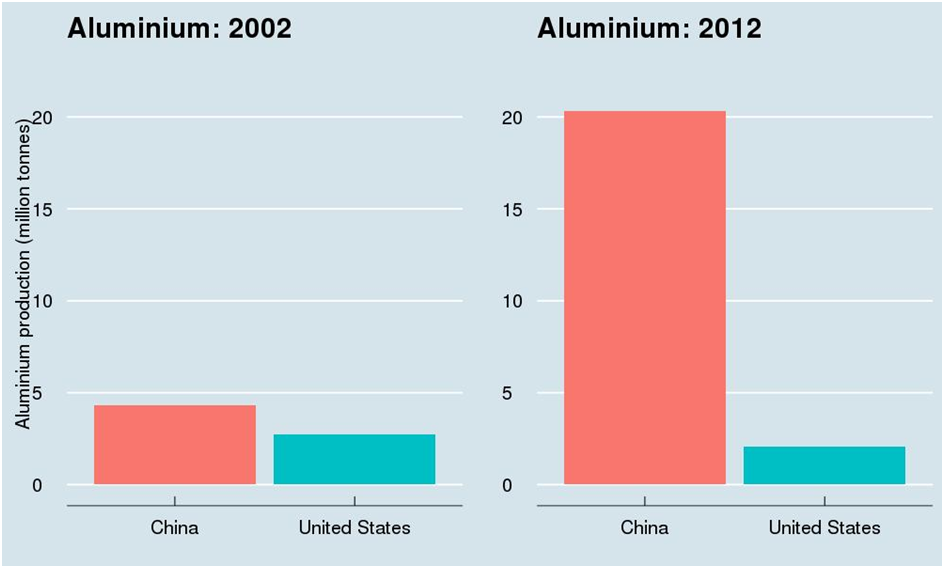
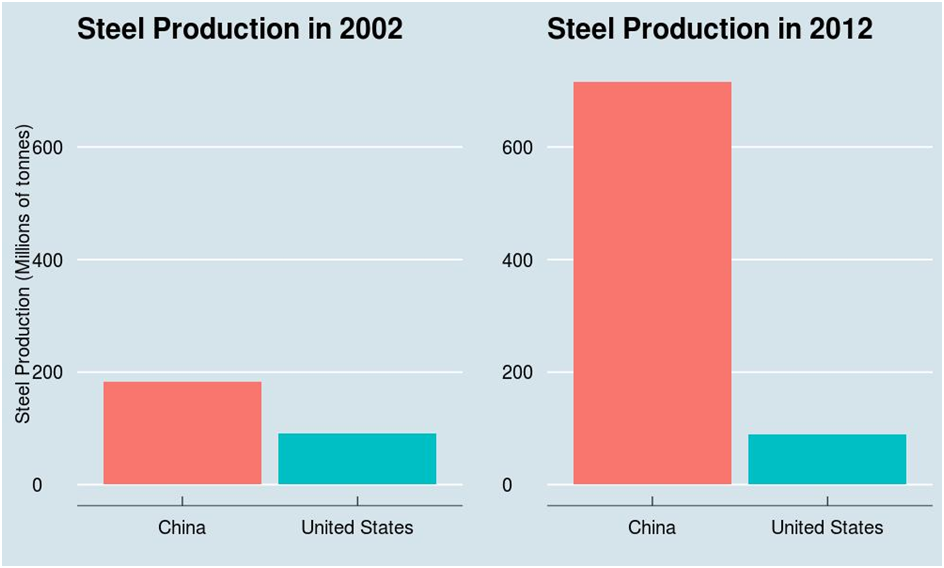
China’s central bank is exploring direct purchases of bonds and other assets to support key sectors of the economy in case the slowdown deepens, according to a leading Chinese business publication. A front-page article in the China Securities Journal – regulated by the central bank – reported growing concerns about the weakness of the money supply and bad debts accumulating in the financial system. The authorities may have to widen the range of possible options for “targeted monetary loosening”. These include surgical stimulus for the West and Central regions, as well as “direct asset purchases by the central bank”, mostly government bonds, financial and railroad debt, as well as state-backed housing bonds. http://www.telegraph.co.uk/finance/china-business/10868381/China-explores-bond-buying-in-first-hint-of-QE.html A decade ago, when China was struggling to clean up its banking system, regulators pulled a rabbit out of a hat. They set up a series of “bad banks” – called Asset Management Companies (AMC) – and took Rmb 1.4tn ($125bn) of debt off the hands of the four State Banks in Beijing. It was a big success, leading to the listing of the “Big Four” banks in Hong Kong and a healthier financial system. Now, they’re trying to pull the same trick again – this time across the country. Regulators have quietly given approval for local governments to set up their own AMCs. As in Beijing ten years ago, these local AMCs would take non-performing loans (NPLs) from local banks, governments and other financial institutions and sell or restructure them. So far, four Provinces have signed on, but once the experiment gets rolling, it’s likely there will be one for each Province across China. http://blogs.ft.com/beyond-brics/2014/06/02/guest-post-chinas-fire-sale-of-the-century/ When The Bubble Bursts: Copper Financing Used to Buy Real Estate; Economic Slowdown Is Exposing Bad Debts China's credit problems are all connected. Rehypothecated copper in Qingdao's port was used to obtain multiple loans from multiple banks, with the loan proceeds invested in the real estate market. In the case of steel traders, much of the money went into real estate and even winery investments. When prices were rising, the steel traders would use loans to hoard steel. When prices started to weaken, they used loans to speculate in real estate and other areas. A lot of money even flowed overseas through letters of credit, in other cases it was was used in high risk and high interest rate investments. With the real estate market cooling and sales of construction materials and furniture collapsing, the capital chain is broken. Receivables are rising because "If you don't pay me and I pay others, aren't I just a sucker?" The capital invested by the rehypothecators is trapped in these cooling and contracting sectors as receivables turnover declines. There is increasing discussion of fleeing debtors. Deeply in debt and having defrauded banks, some debtors may decide to hit the road rather than face the music. Or the silence, since the game of musical chairs is over. Already in Zhejiang and the Pearl River delta there are many cases of debtors fleeing, the cases typically involve steel, copper and aluminum traders investing bank loans into the real estate market. Finally, many industries are being hit by the slowdown, such as electronic components and ceramics. In Foshan last year, some ceramics factories delayed payments to suppliers for 3 to 4 months. Now it is 6 months or longer, and in some cases suppliers haven't been paid for 12 months. This is the textbook case of a credit bubble bursting. The underlying businesses are not unsound. Due to high interest rates and short maturities though, as soon as the boom slows, turnover slows and the cash flow needed to pay back the debt is unavailable. Industries completely unrelated are now tied together due to cross industry loans (with real estate the main terminus for high risk credit). What would otherwise be a cyclical slowdown in the real estate sector is impacting everything from copper traders to fireworks factories, and threatening to bankrupt firms whose underlying business is not failing. http://investinginchinesestocks.blogspot.com/2014/06/when-bubble-bursts-copper-financing.html | June 8th, 2014 23:36:55 GMT China Securities Journal: China should cut banks RRR to match growth A front-page opinion piece in the China Securities Journal (headline via Bloomberg) says that China should cut banks’ reserve requirement ratio (RRR – its the level of cash that commercial banks must keep at the central bank) to match growth. |

| *** http://www.contra-magazin.com/2014/06/die-entdollarisierung-der-russischen-wirtschaft-schreitet-voran/ | |
Редактирано: 1 път. Последна промяна от: sybil |
China's central bank said on Wednesday it will keep monetary policy steady in 2014, even as the finance ministry said fiscal spending had surged nearly 25 percent in May from a year earlier, highlighting government efforts to energize the slowing economy. Total fiscal spending in May rose to 1.3 trillion yuan ($208.75 billion), quickening sharply from a 9.6 percent rise in the first four months of the year. The higher spending comes as the world's second-biggest economy got off to a soft start to the year, growing at its slowest pace in 18 months in the first quarter. The economy has since shown some signs of stabilizing, but the recovery appears patchy and analysts do not rule out further stimulus measures, especially if the cooling property market starts to rapidly deteriorate. Fiscal revenues rose 7.2 percent in May from the same month last year, slowing from a 9.2 percent rise in April. The ministry attributed the slower revenue growth in May to the slowdown in the economy and falling property transactions. China's central bank has been describing its policy stance as "prudent" in recent years, even when it is clearly loosening or tightening the policy reins. At the moment, for instance, authorities are in a gentle easing mode to counter the cooldown in the world's second-biggest economy. The People's Bank of China said the outlook for external demand was uncertain, capital flows were volatile, and financial risks were weighing on the economy. The PBOC's pursuit of stable monetary policy contrasts strongly with the finance ministry's mini-stimulus, which saw total fiscal spending rise 24.6 percent to 1.3 trillion yuan ($208.75 billion) in May as it brought forward spending sharply, from growth of 9.6 percent in the first four months of the year. Товарищ Си ускорява темпото на помпане. |
| Видеото е края на март 2012. Сега две години по-късно нищо не се е променило или сбъднало. Дори разчетите на големия газов договор са в презряната зелена шума. Всъщност има промяна . Курсът на еврото къмто "деревянный рубль" се променил от 38 на 48. |
| ох! това боли! EU, US mull steel import bans http://www.macrobusiness.com.au/2014/06/eu-us-mull-steel-import-bans/ и спасяване на всяка цена: Sydney and Melbourne build ghost cities http://www.macrobusiness.com.au/2014/06/sydney-and-melbourne-build-ghost-cities/ коментарите са дори по-съдържателни от статията.  |
Товарищ Си ускорява темпото на помпане.  The Ministry of Finance wants governments to spend. From Reuters: As it is, Beijing has already instructed local governments to spend all of their 2014 budget by the end of June to shore up the economy, or risk losing the funds. As a result, separate data on Wednesday showed fiscal spending surging 25 percent in May alone. What’s the plan for July through December then? може много да се напише за очевидната шизофрения между намеренията и приказките и реалните действия и уверенията които тов. ли и тов. си дават.  |
| майкъл петис: The four stages of Chinese growth и нещо показателно за предизвикателствата пред таваришчи си и ли и защо едно говорят друго правят: As China’s Leader Fights Graft, His Relatives Shed Assets |
| Велик Китай настигна по още един показател Големия Бял Шайтан. China’s total debt load has climbed to more than two and a half times the size of its economy, underscoring the difficult challenge facing Beijing as it seeks to spur growth without sowing the seeds of a financial crisis. The total debt-to-gross domestic product ratio in the world’s second-largest economy reached 251 per cent at the end of June, up from just 147 per cent at the end of 2008, according to a new estimate from Standard Chartered bank. By comparison, the US had a total debt-to-GDP ratio of about 260 per cent by the end of last year, while the UK’s ratio was at 277 per cent. И до края на годината може и да го надмине. This growing dependency shows no sign of being reversed, with the debt-to-GDP ratio increasing by 17 percentage points in just the last six months (from 234 per cent at the end of last year) compared to an increase of about 20 percentage points for all of last year. Натисни тук |
| малък набор заглавия от септември: Sinosteel in Debt Quagmire; Steel Prices Decline Land Audit Fallout: Six Officials Investigated for... Handan Credit Bubble Affects Entire City Economy Credit Bubble Collapses in Handan; Arrests Made; D... Handan Residents Afraid to Buy Homes; Market Froze... China Will Not Alter Policy For GDP Growth Loan Demand Slumps in Q3 Li Keqiang: Use Reforms to Lower Financing Costs August Price Drop Worst in 10 Years Jingle Mail Comes to Hangzhou Pan Shiyi: Market Still Adjusting China's Double Bubble in Housing New Home Prices Fall 1.1% in August as Buying Rest... Is Central Bank Intervention Hiding Social Mood? Xinhua: The Stock Market Is Safe, Foreigners Are B... People's Daily Rebuts Xinhua: Rate Cuts Not The Op... Xinhua: Still Not Time For Rate Cuts; Don't Quench... Another Credit Guarantee Gone Bust, One Month Afte... Tan Yaling Sees More Dollar Strength China Real Estate of Affiars Hubei Expands Real Estate Bailout Hangzhou Prices Still Falling; Some New Homes Down... FDI Slumps to 2008 Crisis Levels Government Planning Failed, Individuals Will Corre... China Seeks End to Deposit Wars Companies Flee The Real Estate Sector Taking Billi... China Goes After Biggest Monopoly in the World: Go... Real Estate Investment Growth Sinks Below 10% YoY ... China Real Estate Bubble Peaks At Solar Maximum Vanke Office Attacked in Chongqing Iron Ore and Copper Slide 10 Years of Wealth Accumulation Gone in 2 Years First Tier Housing Market Sees Small Confidence Re... China's Latest Nail House Large Developers Start Swinging Axes in the Housin... Real Estate Trusts Sink to 30-Month Low Mid Autumn Festival Sales Forecast Down 15% Chinese Exporters Being Squeezed Rehypothecated Assets A Problem Everywhere Shantytowns Rapidly Expand All Across China Xining Ends Buying Restrictions Even Though Prices... Falling Yuan Socks Debtors; Developers in the Cros... Credit Flows to the Big Developers China's Real Estate Market May Be Down For 2 Years... Ningxia Real Estate Agency Suddenly Shuts Buying Restrictions Fail to Lift Sales, Price Cuts... In Beijing, Developers Attack; In Guangzhou, Buyer... Bad Loans Rise in 1H Government Land Sales Sink 40% in August ICBC Offers No Cost Gold Accumulation Service Credit Growth Weak in August; China Tech Goes Ag; ... 200 Homeowners Protest Price Cuts in Zhejiang Home Price Decline Decelerates in August |
| и една новина от днес: China may replace central bank chief with someone in favor of more stimulus 2 hours ago | September 24th, 2014 14:01:51 GMT PBOC leader Zhou may be replaced The Wall Street Journal is out with a report saying PBOC leader Zhou Xiaochuan may be replaced in what would be a huge move. The report doesn’t sound like vague speculation, they name some of the people who could be involved, including Guo Shuging. Chinese leader Xi Jinping is considering replacing Mr. Zhou, say party officials, as part of a wider personnel reshuffle that also comes after internal battles over economic reforms. The discussions occur as Mr. Xi, now two years in office, tries to place more allies into top positions in the government, military and Communist Party, according to the officials with knowledge of the plans. The personnel shifts are expected around a major party conclave to be held next month, the officials said, while cautioning that no final decision about Mr. Zhou has been made. Last week China delivered a surprise 500B yuan injection into the five biggest banks. That move came just days after reports saying PBOC officials didn’t want to intervene and wanted to squeeze out some of financial excess in the economy. The mixed messages left traders puzzled but if there’s a power struggle at the central bank it makes more sense. The WSJ frames the story saying Zhou has pushed for reforms but the central government wants to ensure growth targets are met. If that’s the case (I’m not so sure) and a new regime that’s more prone to juicing growth is introduced, then it’s a huge potentially positive catalyst for commodity currencies and risk assets. In the short-term, however, uncertainty about the loss of a stabilizing force in markets could cause some fear in markets.  |
 Чарли Дарвин Чарли Дарвин20 Юни 2015 09:30Мнения: 8,544 От: BulgariaСкрий: Име,IP ШОС , БРИКС , Рус Кит , Кит Рус  G 7 - мъка... |
| БРИКС е бедна, но с претенции уния. Онези, които мислят, че по време на инфлация подобни жалки формирования могат да издаянат и издържат изпадат в сериозно заблуждение. Експериментът е факт, но никой не може да гарантира неговите последствия. Гърция също набира скорост да се причисли към БРИКС. Не виждам обаче къде ще и турнат буквата, за да стане абревиацията шестбуквена. |