Демонизацията на Русия & офтопици на rki
Отиди на страница:

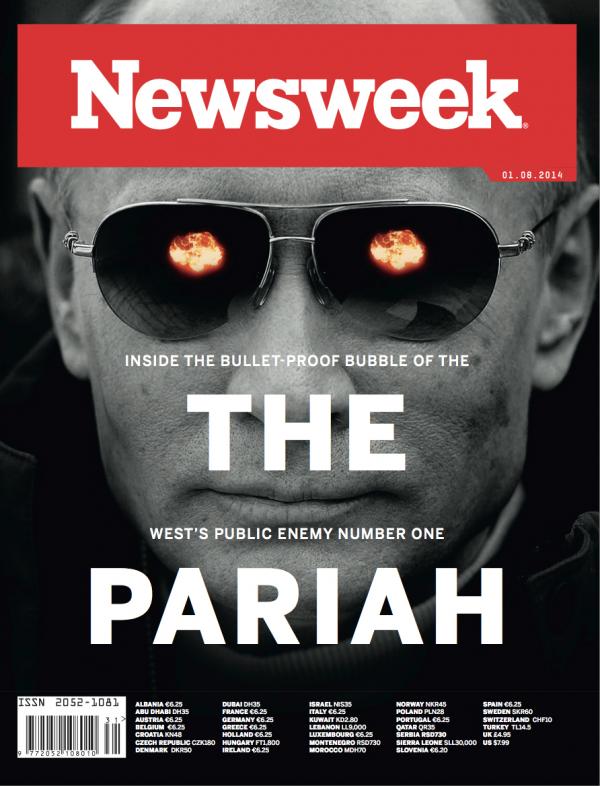
| The demonisation of Russia risks paving the way for war от Шеймъс Милн, Гардиън A quarter of a century after the end of the cold war, the “Russian threat” is unmistakably back. Vladimir Putin, Britain’s defence secretary Michael Fallon declares, is as great a danger to Europe as “Islamic State”. There may be no ideological confrontation, and Russia may be a shadow of its Soviet predecessor, but the anti-Russian drumbeat has now reached fever pitch. And much more than in Soviet times, the campaign is personal. It’s all about Putin. The Russian president is an expansionist dictator who has launched a “shameless aggression”. He is the epitome of “political depravity”, “carving up” his neighbours as he crushes dissent at home, and routinely is compared to Hitler. Putin has now become a cartoon villain and Russia the target of almost uniformly belligerent propaganda across the western media. Anyone who questions the dominant narrative on Ukraine – from last year’s overthrow of the elected president and the role of Ukrainian far right to war crimes carried out by Kiev’s forces – is dismissed as a Kremlin dupe. That has been ratcheted up still further with the murder of the opposition politician Boris Nemtsov. The Russian president has, of course, been blamed for the killing, though that makes little sense. Nemtsov was a marginal figure whose role in the “catastroika” of the 1990s scarcely endeared him to ordinary Russians. Responsibility for an outrage that exposed the lack of security in the heart of Moscow and was certain to damage the president hardly seems likely to lie with Putin or his supporters. But it’s certainly grist to the mill of those pushing military confrontation with Russia. Hundreds of US troops are arriving in Ukraine this week to bolster the Kiev regime’s war with Russian-backed rebels in the east. Not to be outdone, Britain is sending 75 military advisers of its own. As 20th-century history shows, the dispatch of military advisers is often how disastrous escalations start. They are also a direct violation of last month’s Minsk agreement, negotiated with France and Germany, that has at least achieved a temporary ceasefire and some pull-back of heavy weapons. Article 10 requires the withdrawal of all foreign forces from Ukraine. But Nato’s hawks have got the bit between their teeth. Thousands of Nato troops have been sent to the Baltic states – the Atlantic alliance’s new frontline – untroubled by their indulgence of neo-Nazi parades and denial of minority ethnic rights. A string of American political leaders and generals are calling for the US to arm Kiev, from the chairman of the joint chiefs of staff, General Martin Dempsey, to the new defence secretary, Ashton Carter. For the western military complex, the Ukraine conflict has the added attraction of creating new reasons to increase arms spending, as the US army’s General Raymond Odierno made clear when he complained this week about British defence cuts in the face of the “Russian threat”. Putin’s authoritarian conservatism may offer little for Russia’s future, but this anti-Russian incitement is dangerous folly. There certainly has been military expansionism. But it has overwhelmingly come from Nato, not Moscow. For 20 years, despite the commitments at the end of the cold war, Nato has marched relentlessly eastwards, taking in first former east European Warsaw Pact states, then republics of the former Soviet Union itself. As the academic Richard Sakwa puts it in his book Frontline Ukraine, Nato now “exists to manage the risks created by its existence”. Instead of creating a common European security system including Russia, the US-dominated alliance has expanded up to the Russian border – insisting that is merely the sovereign choice of the states concerned. It clearly isn’t. It’s also the product of an alliance system designed to entrench American “leadership” on the European continent – laid out in Pentagon planning drawn up after the collapse of the Soviet Union to “prevent the re-emergence of a new rival”. Russia has now challenged that, and the consequences have been played out in Ukraine for the past year: starting with the western-backed ousting of the elected government, through the installation of a Ukrainian nationalist regime, the Russian takeover of Crimea and Moscow-backed uprising in the Donbass. On the ground, it has meant thousands of dead, hundreds of thousands of refugees, indiscriminate shelling of civilian areas and the rise of Ukrainian fascist militias such as the Azov battalion, supported by Kiev and its western sponsors, now preparing to “defend” Mariupol from its own people. For the bulk of the western media, that’s dismissed as Kremlin propaganda. Russian covert military support for the rebels, on the other hand, is denounced as aggression and “hybrid warfare” – by the same governments that have waged covert wars from Nicaragua to Syria, quite apart from outright aggressions and illegal campaigns in Kosovo, Libya and Iraq. That doesn’t justify less extreme Russian violations of international law, but it puts them in the context of Russian security. While Putin is portrayed in the west as a reckless land-grabber, in Russian terms he is a centrist. As the veteran Russian leftist Boris Kagarlitsky comments, most Russians want Putin to take a tougher stand against the west “not because of patriotic propaganda, but their experience of the past 25 years”. In the west, Ukraine – along with Isis – is being used to revive the doctrines of liberal interventionism and even neoconservatism, discredited on the killing fields of Iraq and Afghanistan. So far, Angela Merkel and François Hollande have resisted American pressure to arm Kiev. But when the latest Minsk ceasefire breaks down, as it surely will, there is a real risk that Ukraine’s proxy conflict could turn into full-scale international war. The alternative is a negotiated settlement which guarantees Ukraine’s neutrality, pluralism and regional autonomy. It may well be too late for that. But there is certainly no military solution. Instead of escalating the war and fuelling nationalist extremism, western powers should be using their leverage to wind it down. If they don’t, the consequences could be disastrous – far beyond Ukraine. Натисни тук | |
Редактирано: 2 пъти. Последна промяна от: wreckage |
And much more than in Soviet times, the campaign is personal. It’s all about Putin.  Въртят ги ставите и старият мазол от мюнхенската реч. Я къв сняг е в натовска София - начало на наполеоновски подмосковен.  |
| Милн е изпълнителен редактор на Гардиън, а баща му е бил последният governor на BBC, преди Маги, maysherustinpiece, брутално да го изволни заради позицията на медията по Фолкландската простотия. |
wreckage 05 Мар 2015 18:51 Милн е изпълнителен редактор на Гардиън, а баща му е бил последният governor на BBC, преди Маги, maysherustinpiece, брутално да го изволни заради позицията на медията по Фолкландската простотия. Ако все пак някога е имало относително свободна роботърговска преса, то това беше преди войната на/за Малвините - дотогава се опитваха да спазват някакво благоприличие, били то и роботърговско. Но тогаз управляващата роботърговска върхушка се усети и сложи намордника на ББС - и от този момент не гъкнаха! ---- заб. пак по това време си спомням, че играещият в Тотнъм Ози Ардилец не бе освиркван и обругаван на мачовете по Острова - т.е. Великият Братски Великобритански и СеверноИрландски Суверен знаеше, че роботърговците не са прави! |
| Well spotted, wreckage. Доживяхме да четем истини за Русия в чужди издания. В българските медии в интернет виждам главно бесна антируска, почти нацистка пропаганда. |
В българските медии в интернет виждам главно бесна антируска, почти нацистка пропаганда. И все по-агресивна става. |
Meto ot Interneto 05 Мар 2015 20:03 то и любимият ми Гардиън е пълен с pc drivel по темата, но поне има плурализъм на мненията.  | |
Редактирано: 1 път. Последна промяна от: wreckage |


| BBC's Viewpoint: What West must do in Ukraine By Anatol Lieven Professor, Georgetown University's School of Foreign Service in Qatar Reopen economic ties The Ukrainian parliament has to pass a resolution on this within 30 days of the ceasefire. By the end of 2015, Ukraine is to regain full control of its borders in the east; but also by the end of 2015, a new Ukrainian federal constitution has to be adopted incorporating special autonomous status for the Donbas. In the meantime, the government in Kiev will reopen economic ties with the Donbas and resume paying official salaries in the region - thereby helping in the process of reintegrating it into Ukraine. For Kiev and Western governments, this agreement secures their most important goal of preserving the sovereignty and territorial integrity of Ukraine, minus Crimea, with a central government which preserves the ability to conduct desperately needed reforms. This is a goal which could otherwise only be achieved through victorious war - and whatever hawks in the USA may think, any full-scale war between Ukraine and Russia will almost certainly result not in Ukrainian victory, but in a crushing Ukrainian defeat and the further dismemberment of the country. Moreover, trying to turn Ukraine into a country capable of planning such a war would require a degree of authoritarian nationalism which would move Ukraine not closer to the European Union, but even further away from it. For Russia, this deal preserves the Donbas as a distinct autonomous area within Ukraine. A federal constitution would also help guarantee the position of Russian-speaking areas of the country against any move to forced ukrainianisation from Kiev. From Moscow's point of view, this would also make it much more difficult to move Ukraine into the West's military camp without a strong consensus behind this in Ukrainian society - a consensus which was present in central European countries during their move to join Nato, but which has never existed in Ukraine. This is the main sticking point as far as hardliners in both Ukraine and the US are concerned: that the present deal will make Ukraine's membership in Nato and the EU impossible. 'Long and painful changes' In actual fact, however, these are non-issues. By repeatedly stating that under no circumstances will Nato troops be sent to defend Ukraine, Nato seems to have rendered the idea of Ukrainian membership an unlikely prospect. As for EU membership, it's unlikely any West European leader has ever considered this as more than the remotest of prospects, decades in the future and dependent on a whole series of extremely long and painful changes. This is a decision therefore which would in all circumstances have to be left to a future generation. Moreover, given the economic reality of Ukrainian economic dependence on Russia, salvaging Ukraine's collapsing economy can only be done in co-operation with Russia, not against her. Unless, that is, the EU is prepared to demand from West European populations enormous sacrifices for the sake of helping Ukraine. Anyone who believes that is likely should have a brief conversation with a Greek. For the ceasefire to hold and a political solution to be reached, the governments of France and Germany will have to show an unwonted degree of resolve and toughness over the next year. On the one hand, they will have to make clear to Moscow that the relaxations of sanctions against Russia will only come as a result of clear and consistent pressure on the Donbas rebels to abide by the terms of the ceasefire and to pursue autonomy within Ukraine, and not independence. On the other hand, they will need to make clear to the Ukrainian government and to hardliners in Washington that significant EU aid to Ukraine, and an eventual path to possible EU membership, both depend on Kiev honouring the promise of real autonomy for the Donbas. The present ceasefire and the associated political process are not perfect, but they present the best chance so far of ending this conflict, preserving by far the greater part of Ukraine as a unitary state, and avoiding an escalation of the war that would most probably be very bad for Russia and the West, and absolutely disastrous for Ukraine. Anatol Lieven is a professor at Georgetown University in Qatar and author among other books of Ukraine and Russia: A Fraternal Rivalry. целият много качествен текст: Натисни тук |
| Интервю с британския учен Richard Sakwa: Политиката на ЕС в Украйна е глупост в голям мащаб Натисни тук |
интервю с кунгуров - К годовщине «крымнаш» (запутинцам не читать!)  - Получается, что Запад может расчленять Югославию, Ливию, Сирию, оккупировать Ирак и Афганистан, а Россия должна знать свое место, как вы говорите, «под шконкой» и не отсвечивать? - Совершенно верно – каждый должен знать свое место. США могут творить любой беспредел, потому что по действующим международным понятиям – это мировой пахан. Если европейцы заручатся согласием пахана, они тоже могут творить любой беспредел. Сильные страны могут нагибать слабых. А слабые должны сидеть тихо «под шконкой» и не отсвечивать. - Вы считаете, что Россия – слабая держава? РФ – это вообще не держава, а ее ошметок (держава почила в бозе в 1991 г.), и да, это очень слабая страна. Сила государства уже давно не меряется количеством ядерных боеголовок и танковых дивизий. Сила любого государства в экономическом, культурном (духовном, идеологическом) и интеллектуальном потенциале. Экономически Россия слаба катастрофически, структурно ее экономика не самодостаточна, две трети нашей экономики – составляет две трубы – экспортная и импортная. Таким образом она находится в абсолютной зависимости от внешних обстоятельств или сил. Отрежьте РФ возможность экспорта – она издохнет. Отрежьте ей возможность подпитываться импортом – она издохнет. Перекройте ей обе трубы сразу – она издохнет очень быстро. В области идеологии у нас вообще полный пипец – никакой национальной идеи, идеи развития страны нет, а если нет идеи, то нет и нации, народа. Есть лишь кастрированное идейно стадо потребителей. Да, они потребляют в том числе и пропагандистско-идеологический суррогат про вставание с колен. - Извините, что прерываю, но раньше Вы говорили, что идеология у нас все же есть, но навязывается идеология, чуждая русскому народу. - Я и сейчас именно это сказал – у нас нет НАЦИОНАЛЬНОЙ идеологии. А идеологический базис общества полностью «импортный» - в политике у нас убогая парламентская «демократия» полностью скалькированная с западных схем. В экономике абсолютно доминирует уродливый либерастический догмат, тупо собезьянничанный у того же Запада. Правовая система – родом оттуда же, в культурной сфере доминирует западная поп-культура и кинематограф. В Москве, как наиболее дерусифицированном городе, уже и вывеску на русском языке трудно найти – доминирует латиница. Так вот, резюмирую – экономически РФ слаба, культурно – это давно уже колония Запада, а по поводу интеллектуальной мощи нашей элиты я могу рассказывать только анекдоты. То есть с точки зрения Запада Россия – это такая пьяная слабоумная обезьяна, но с гранатой в руке. И вот эта обезьяна вдруг начинает махать гранатой и гнобить соседних обезьян. А соседние обезьяны – они ведь не сами по себе, они под кем-то. То есть та же Украина – это шлюшка США и ЕС. А тут вдруг Путин взял и отшлепал шлюшку, принадлежащую серьезным паханам. Паханам не шлюшку жалко, у них этого добра полно. Тут получается, что пьяная обезьна с гранатой посягнула на авторитет мировых паханов. Назовите мне хоть одну причину, по которой паханы утрутся и забудут о мелком «крымском недоразумении». - Но мне кажется, Запад тоже не так силен, чтобы пойти на прямую конфронтацию с Россией. - Отчего же вы так думаете? Если НАТО 17 марта не вторглась на территорию РФ, чтобы наказать ее за Крым, это вовсе не означает, что «мыпобедили», как в экстазе верещали ватные патриоты. Зачем тратить силы на борьбу со страной, которая зависима от тебя? Война – это бизнес-проект. Война в Ливии рентабельна, потому что победитель получает колоссальные нефтяные богатства. Да и воевал там Запад лишь в небе, всю черную и кровавую работу делали туземцы. Война в Сирии Западу практически ничего не стоит. А зачем воевать с РФ, если ее можно в течение нескольких лет гуманно, одними лишь пропагандистскими, дипломатическими и экономическими усилиями поставить раком? Итак, прошел год после «крымнаш». Итог мягкого давления Запада – демонизация в глазах мирового общественного мнения и политическая изоляция России, отлучение от западной кредитной сиськи, крах «Южного потока», крах проекта разработки арктического шельфа, в перспективе бесконечная война на нашей границе (тут Путин тоже сыграл блестяще – из двух плохих ходов он всегда выбирал третий – безумно плохой). Рубль рухнул в пропасть, нефтяные цены «вдруг» упали и могут, если надо опуститься еще ниже, илитка в панике, потому что Запад сделал ее финансовой заложницей. У Запада в запасе еще много козырей. У Путина их нет. |
РФ – это вообще не держава, а ее ошметок (держава почила в бозе в 1991 г.), и да, это очень слабая страна. Сила государства уже давно не меряется количеством ядерных боеголовок и танковых дивизий. Сила любого государства в экономическом, культурном (духовном, идеологическом) и интеллектуальном потенциале. Много весела конфигурация на съотношение бойни кратуни - развита икономика - интелектуален потенциал. Нито първото - първо, нито второто - второ, а от третото - хич.  |
| Борбата за зараждащата се в Русия човешка култура на бъдещето http://www.segabg.com/replies.php?id=254922 |
| Frontline Ukraine: 'How Europe failed to slay the demons of war' In an extract from his new book, historian Richard Sakwa argues that the current conflict has its roots in the exclusion of Russia from genuine partnerships since the end of the cold war ...The asymmetrical end of the cold war effectively shut Russia out from the European alliance system. The failure to establish a genuinely inclusive and equal security system on the continent imbued European international politics with powerful stress points, which in 2014 produced the international earthquake that we now call the Ukraine crisis. There had been plenty of warning signs, with Boris Yeltsin, the Russian Federation’s first leader, in December 1994 already talking in terms of a “cold peace”. When he came to power in 2000, the Russian president, Vladimir Putin devoted himself to overcoming the asymmetries... целото --->Натисни тук |
| попаднах на това интервю, не е съвсем прясно, но пък е актуално. Така и не разбрах кого интервюират, слушам го в превод на руски, щото друг език не разбирам. Казва интересни неща за робството на Щатите, т.е. как са поробени от Англия. https://www.youtube.com/watch?v=TIQ9DwlwCn0 | |
Редактирано: 1 път. Последна промяна от: Село_ |
 Cognitive Dissonance in Russia by Simeon Djankov I can think of two possible explanations of this apparent cognitive dissonance. First, the majority of Russians like suffering: When times get tough they feel more cheerful. Second, that respondents fear giving truthful answers as the paranoia over the all-present state has increased fast. Of those, the second explanation has some empirical support. In a different survey by the same agency, only 12 percent of respondents thought their anonymity was truly protected. http://blogs.piie.com/realtime/?p=4861 |